
Shreveport Previous Residents by Era
Who lived here before is not answered by one continuous file. Begin with the newest reliable parcel record and move back. Deeds identify legal parties; directories and census schedules add households; maps date structures; permits and obituaries explain changes. Always record the year because each source describes a different point in the address trail.
| Source | Local Years | Where Held | What It Shows |
|---|---|---|---|
| Conveyance images | 1839-present | Caddo Clerk web and Record Room | Parties, dates, deed, legal description |
| Computer conveyance index | Direct 1914-present; indirect 1983-present | Caddo Clerk | Buyer and seller search paths |
| City directories | 1881-1996 incomplete; print about 1924-present | Shreve Memorial and digital sources | Dated names, addresses, phones |
| Federal census | Through 1950 under the 72-year rule | NARA and library databases | Households and relationships |
| Sanborn maps | Selected 1885-1963 years | Library and map archives | Building form and numbering, no residents |
| Permits | Current system; older files being scanned | Shreveport Permits | Project dates and participants |
For recent previous residents, start with assessor and deeds. For the early twentieth century, pair a directory edition with a census and Sanborn sheet. For the nineteenth century, courthouse books, tax material, newspapers, and archives carry more weight.
Start Shreveport House History Today
Pull the current Caddo Assessor card and preserve the owner name exactly, mailing and situs addresses, parcel or property ID, legal description, subdivision, lot and block or Section-Township-Range, homestead flag, map link, and transfer clue. The assessed owner may not occupy the property. Still, that name and stable land description provide the cleanest entry to the deed chain.
Use the parcel polygon to check that the address points to the intended lot. Corner parcels, multi-unit buildings, split land, and old civic numbers can mislead a text search. The legal description usually survives changes to a street label.
Trace Caddo Deeds Backward
The Caddo Parish Clerk of Court supplies the formal transfer trail. A prior owner is found by changing the role used for the next search. Confirm each step with the same land description, since similar names and nearby parcels can produce false matches.
- Find the current owner as grantee, or buyer, near the assessor's transfer date.
- Open the instrument detail and record grantor, grantee, execution and recording dates, instrument number, book and page, transfer type, and legal description.
- Search that grantor as a grantee in an earlier period. Include initials, spouse, estate, trust, or business forms.
- Repeat while the description stays continuous. Check mortgages, cancellations, judgments, releases, and plat references around each transfer.
- When digital name searching ends, use alpha books, whole-book images, book and page, or the Clerk's Record Room.
- Grantor
- The party transferring a recorded interest.
- Grantee
- The party receiving that interest.
- Chain of title
- The linked sequence of recorded transfers for the same land.
- Legal description
- The formal lot, block, subdivision, acreage, or survey wording that identifies land despite address changes.
The Caddo remote-coverage page shows where digital indexes and images begin.

The capture helps set expectations before payment. The free eClerks index, paid Clerk Connect images, courthouse books, and copy requests are separate access channels.
Shreveport Records Before Computer Indexes
Old Caddo records are not absent merely because a modern name box returns nothing. Conveyance images reach back to 1839, while the direct computer index starts in 1914 and the indirect index starts much later. Before 1914, use handwritten direct and indirect books. Before 1951, registry numbers can be reused and one old page can contain more than one instrument.
The Clerk's historical-search help explains whole-book, alpha-key, book and page, and plat methods.
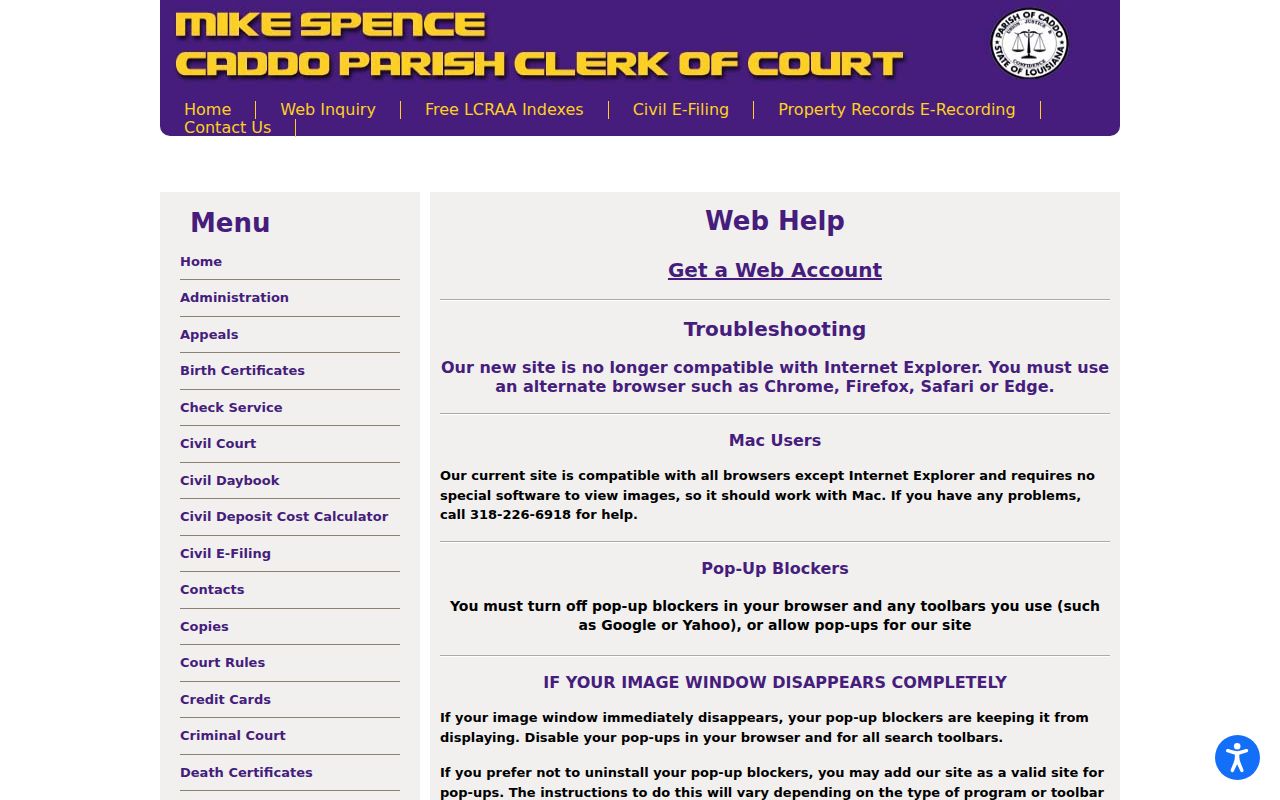
This screen marks the point where prior-owner research changes method. Use the Record Room and custom subdivision route when the online index cannot represent the old book.
A written order is also available through the Caddo copy-request process.
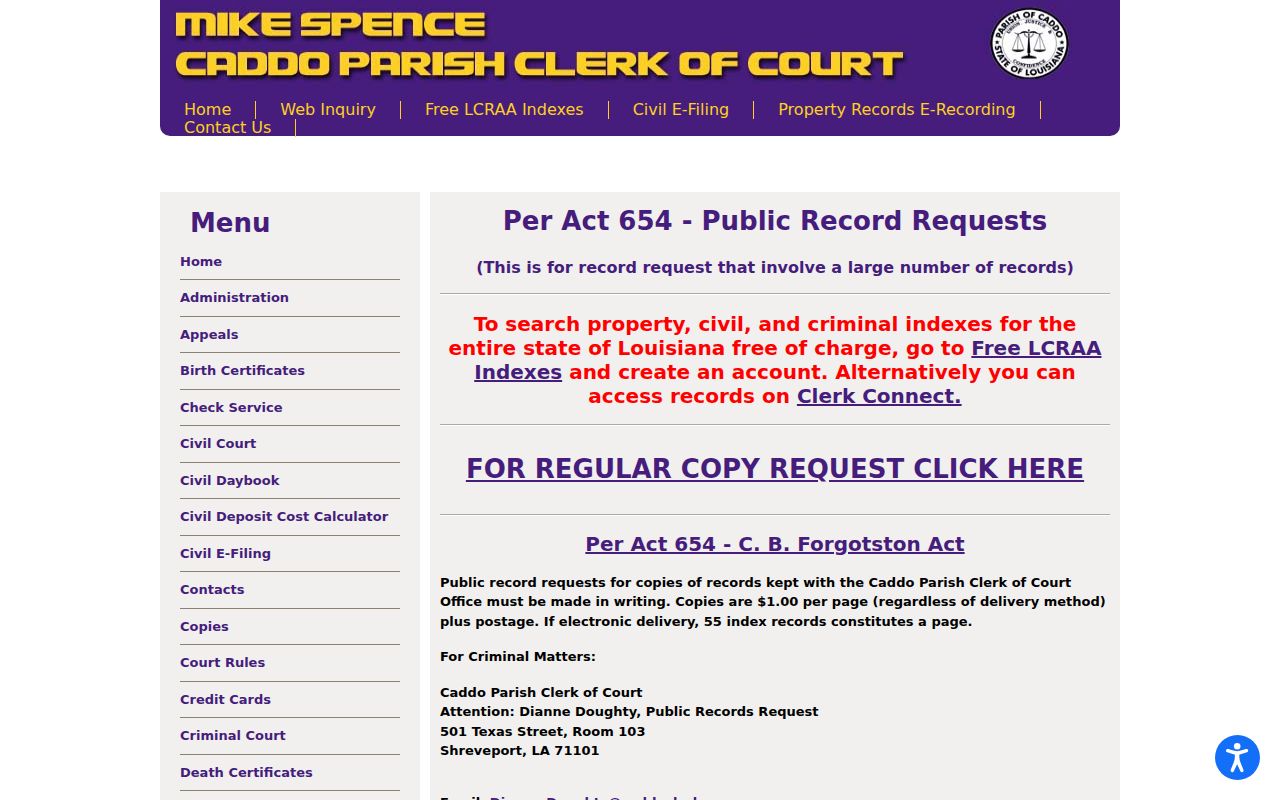
The request capture shows the non-portal fallback. Supply record type, names, date range, and book or page clues when known; general copies are $1 per page plus postage.
Map Old Shreveport Buildings
Sanborn fire-insurance maps can show whether a structure existed and how it changed. Local years include 1885, 1890, 1896, 1899, 1904, 1909, 1921, and 1935, with later revisions through 1963. Sheets may show footprint, use, material, height, doors, windows, lot lines, house or block numbers, water mains, and rear buildings. They do not name previous residents.
Shreve Memorial received three volumes covering 1935-1963 and has older microfilm editions. The Library of Congress Sanborn guide explains map symbols and research use.
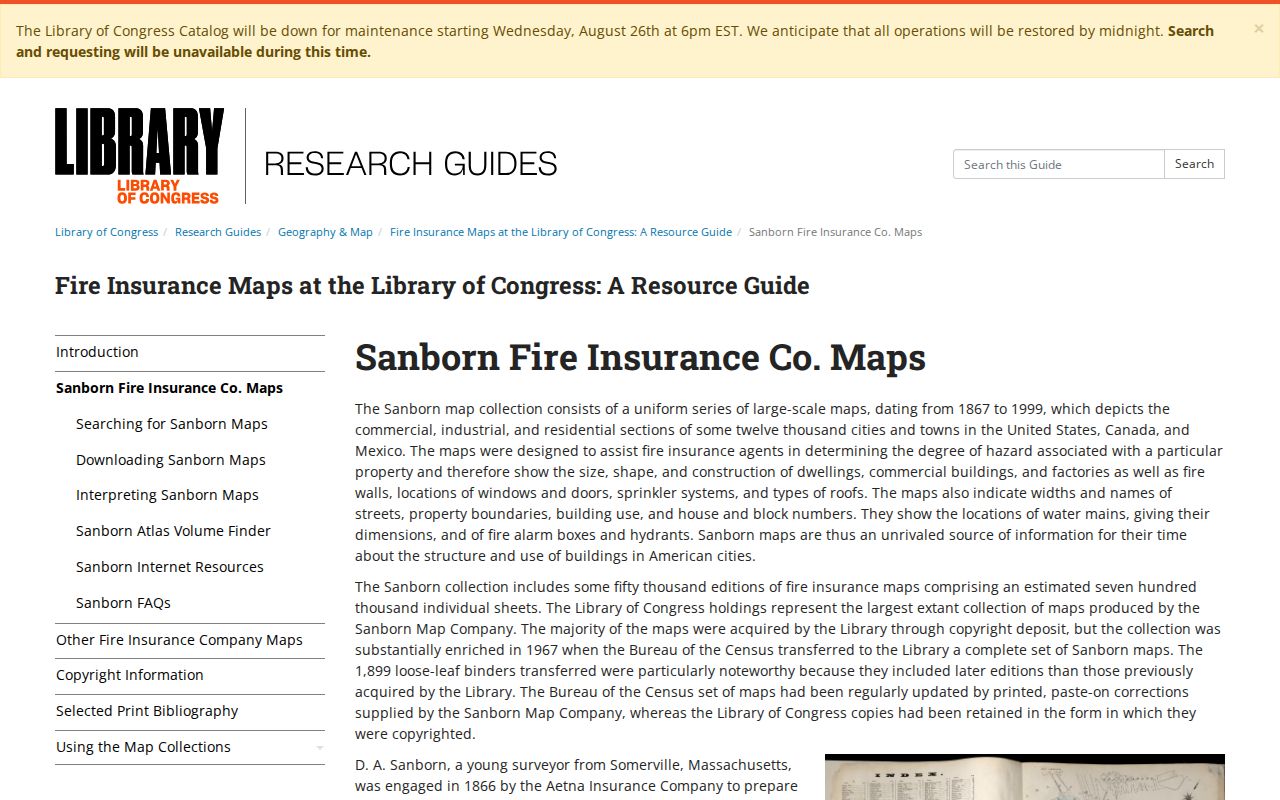
The image helps decode building evidence. Match the sheet to the dated street name and number, then compare its footprint with deeds, directories, and permits.
Resolve Shreveport Street Changes
Circa-1932 examples include 1st or Agurs becoming Levee, 2nd becoming Cadillac, 3rd becoming Thatcher, 7th becoming Highland Avenue, Adams Avenue becoming Gladstone Boulevard, and Caddo Avenue becoming Tulsa Avenue. Verify any crosswalk with a city directory, map, legal description, or municipal source.
A 1920 census citation also spells Delaware as “Dellaware.” Search the printed variant as well as the current form. Ward, neighborhood, subdivision, lot, old street, and current street may all describe the same place. This is why legal descriptions and page images beat a neat but unsupported address match.
Corroborate Shreveport Past Residents
If the deed trail stops at an estate, search the civil index for succession or possession records and the newspaper archive for an obituary. A succession is the Louisiana court process for handling an estate. Caddo's online civil name coverage begins in 1984, while older material may need courthouse or archive work. Obituaries can supply relatives, former places, and death context, but a mention should still be tied to the right person.
LSUS Northwest Louisiana Archives holds Caddo tax-roll material with names, addresses, acreage, property, and tax fields in historic series. Shreveport permits can add construction or inspection dates. The City has been working to scan older inspection logs and plans, but current projects do not prove that all old files are online.
Historical vital indexes can help close a trail after a household disappears. The Louisiana State Archives vital index is the official route for records old enough to be open.
The capture identifies the archive channel, not a current-resident search. Louisiana keeps birth records confidential for 100 years and death records for 50 years before older material transfers to Archives.
Shreveport Previous Residents Beyond Owners
Owners are only half of a house history. Address and criss-cross directories may name a subscriber or occupant, including someone who did not own the land. Federal census schedules can identify household members and relationships through 1950 under the 72-year rule. Directory runs begin in 1881 but contain gaps, and the library reports print holdings from about 1924 onward. The Shreveport directory book collection covers the shelf itself.
- Choose a dated directory edition closest to the deed transfer.
- Copy the address, name, phone, occupation, spouse notation, abbreviations, edition, and page exactly.
- Compare the closest open census year, using ward, enumeration district, neighbors, and household details.
- Test one earlier and one later directory to bracket a move rather than assigning an exact date.
- Use obituary, cemetery, succession, tax, or permit evidence to resolve gaps.
A 1923 local example linked a printed address, census evidence, and a later death record. Its “Dellaware” spelling is a reminder to search variants. Never force a similar surname into the chain when the parcel, spouse, occupation, ward, or dates disagree.
Lawful use. Research Shreveport previous residents for family history, estate work, house history, and personal curiosity. Never use the findings to track, harass, or harm a living person.
What Shreveport House Records Miss
No source proves uninterrupted occupancy. Deeds show interests and transfers. Directories omit some people and can lag. Census addresses can be unclear. Sanborn maps describe buildings, not households. Permits name work participants. Missing scans, sealed files, brief stays, and changed street numbers break a smooth timeline.
Label every source with its own date and access level. A no-result can mean a wrong party direction, unscanned image, reused registry number, renamed street, or request-only series. Ask the custodian which book, index, image, or request channel covers the date rather than inventing a courthouse-disaster story.
Keep negative findings when they rule out a tempting match. A different middle initial, spouse, occupation, ward, parcel, or legal description can show that a same-name deed belongs elsewhere. Mark that result as excluded and retain the citation. When the chain truly ends, state the last proven owner, the last dated household source, and the next unsearched custodian. That is more useful than filling a gap with an undated online claim.
Older access often requires advance contact. Shreve Memorial's Special Collections holds print directories, newspaper microfilm, maps, and address-organized material at the Main Branch. The Broadmoor genealogy staff offers research instruction and library-only databases. LSUS archival collections are noncirculating and may have reproduction rules. A focused request should name the address variants, date range, known people, subdivision, and the exact source already checked.