
Shreveport City Directory Holdings
Shreveport's historical directory shelf is broad, but it is not one seamless annual run. The current Shreve Memorial Library Special Collections description says its print city directories cover 1924 to the present and can be approached by name, address, or phone. An older Ark-La-Tex genealogy inventory describes an incomplete local span from 1881 through 1996 and older issues on microfilm. Those descriptions differ slightly, so confirm a needed edition with the reference desk before making a trip.
| Collection | Years | Where Held | Access |
|---|---|---|---|
| Print Shreveport directories | 1924 to present on current page | Shreve Memorial Main Branch | In person and staff help |
| Polk and Brueggerhoff runs | Named editions, 1881 to 1996, with gaps | Louisiana Collection | Print or microfilm, verify first |
| Cole's runs | 1962-63 to 1995-96, with gaps | Louisiana Collection | In person, cross-check editions |
| Digitized 1923 volume | 1923, 924 pages | Google Books, NYPL original | Online preview varies |
| NARA city directories | 1928-1932 | National Archives | Federal holding request |
Edition labels matter. A volume marked 1923-24 is one publication, not proof that two separate annual books exist. Reported Polk or Brueggerhoff gaps include 1883 through 1896 and scattered later years. Cole's begins much later. The absence of a household in one edition may reflect a missing book, late canvass, move, death, or an unlisted entry. It does not prove that the family left Shreveport.
Shreveport Directory Research Room
The Main Branch research desk is at 424 Texas Street in downtown Shreveport. Special Collections lists 318-226-5897 and eref@shreve-lib.org. Its published hours are Monday through Thursday, 9 a.m. to 9 p.m.; Friday and Saturday, 9 a.m. to 6 p.m.; and Sunday, 1 to 5 p.m. Hours can change, so call before planning a long microfilm session. A precise request should name the person or address, the likely years, and whether the search needs alphabetical, address, or phone organization.
The room also keeps Louisiana history material and local newspaper microform. That makes it possible to move from a city directory entry to a death notice, business item, or address report without changing repositories. Library access is the main fallback when a volume is not digitized. Some databases, including Ancestry Library Edition, are available only at a library terminal.
Before scrolling film, write down every likely spelling. Initials, shortened first names, and street abbreviations are common. Search the edition before and after the target year. Staff can also help identify whether an address-ordered section exists in a given volume.
Shreveport's Digitized 1923 Directory
The Google Books catalog for the 1923 Shreveport directory identifies a 924-page Research Publications reproduction from a New York Public Library original. Preview and page-search access can vary, but the record gives a useful remote starting point. Its indexed words include names, streets, firms, institutions, and abbreviations such as rooms, carpenter, salesman, and teacher.
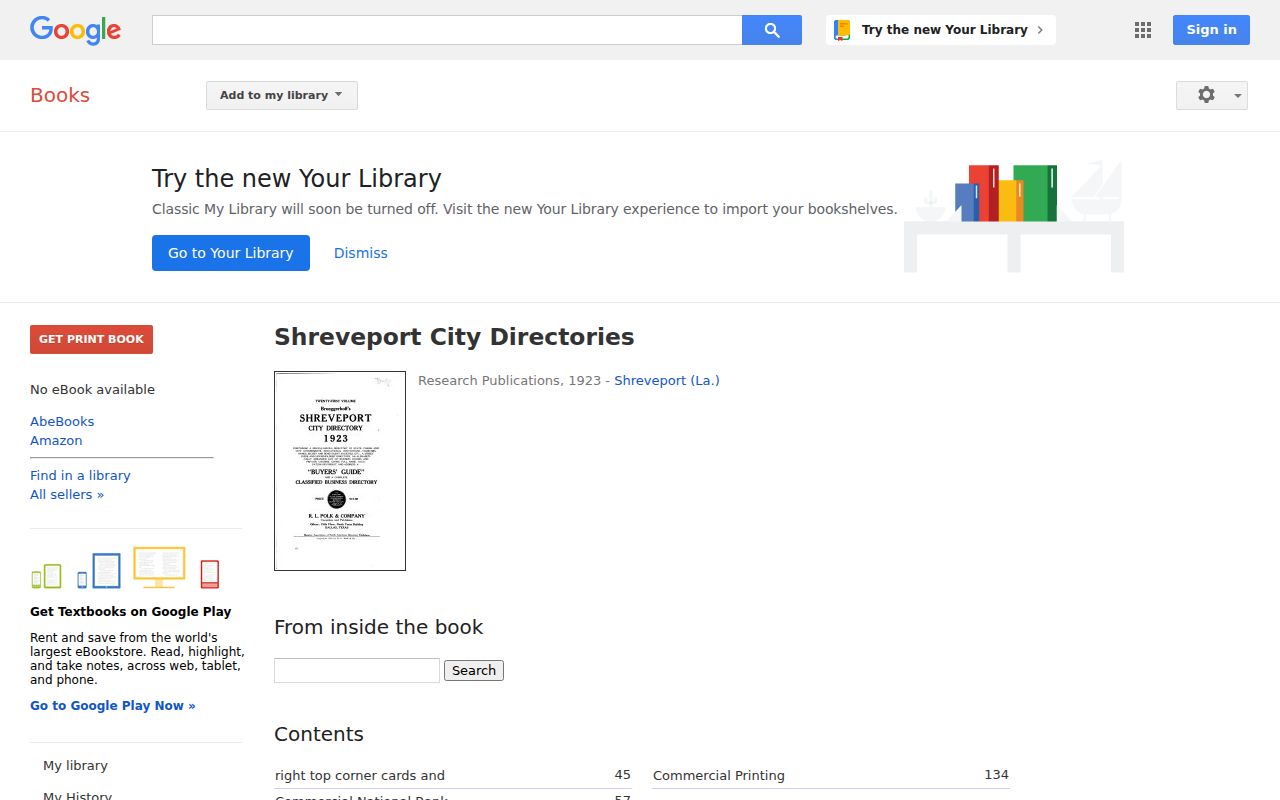
An online snippet is a pointer, not a full transcription. Record the page number and inspect the page image when it is available. If preview access is limited, take the citation to Shreve Memorial, the National Archives holdings list, or another library that has Shreveport microfilm.
Read Shreveport Directory Entries
A Shreveport listing is compact. Begin with the alphabetic personal-name section, then consult the front-of-volume key before expanding any code. The verified local descriptions show that entries can include a name, occupation, and residence address. They may also connect readers to civic institutions, cemeteries, and libraries. Do not assume every edition supplies a spouse, phone, or owner mark. Those details must be visible in that volume.
| Personal name | Copy surname, given name, initials, and page number exactly. |
|---|---|
| Work detail | Historical trade or firm may separate two people with the same name. |
| Residence | Keep house number, street spelling, and printed prefix or suffix. |
| Phone detail | Use only when printed; an unlisted number will not appear. |
| Edition key | Read that volume's own abbreviation list before interpreting codes. |
- Criss-cross directory
- An address-ordered section that lets a reader start with a street and house number. Shreveport's verified route is its address-organized holdings, not a promised separate series for every year.
- Householder index
- A list keyed to the person responsible for a household, often used beside the alphabetic pages.
- Abbreviation key
- The edition's guide to short forms. Save it with the entry because meanings can change between publishers and years.
Shreveport Records Beyond Directories
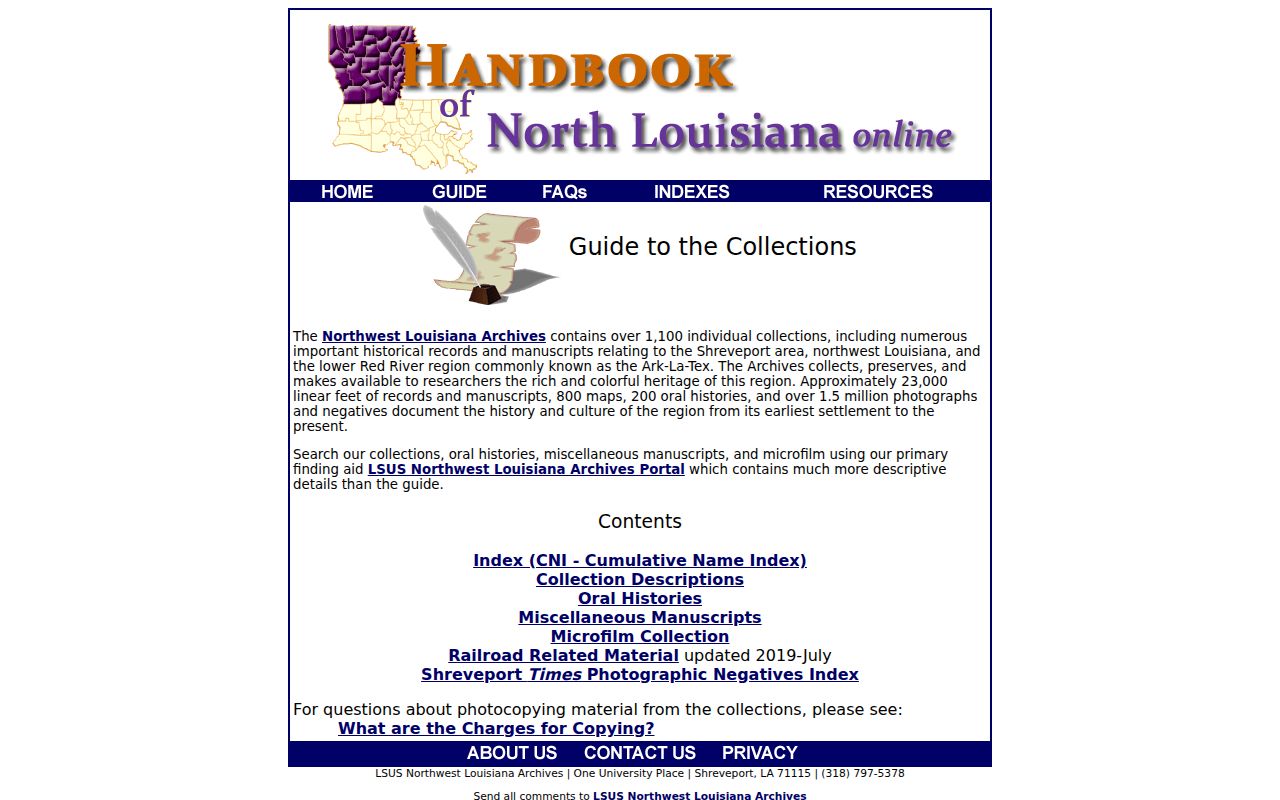
When the city directory shelf goes quiet, university records can bridge the missing year. The LSUS Northwest Louisiana Archives guide describes more than 1,100 collections, about 23,000 linear feet of records, 800 maps, 200 oral histories, and over 1.5 million photographs and negatives. Search paths include collection descriptions, oral histories, microfilm, railroad material, newspaper negatives, and a cumulative name index.
The Caddo Parish Sheriff Tax Assessment Roll Books cover 1880-1920 and 1954. They can name a taxable person and supply an address, acreage, property description, cash value, and total assessment. That is a strong bridge when an old directory entry does not say whether the listed resident owned the site.
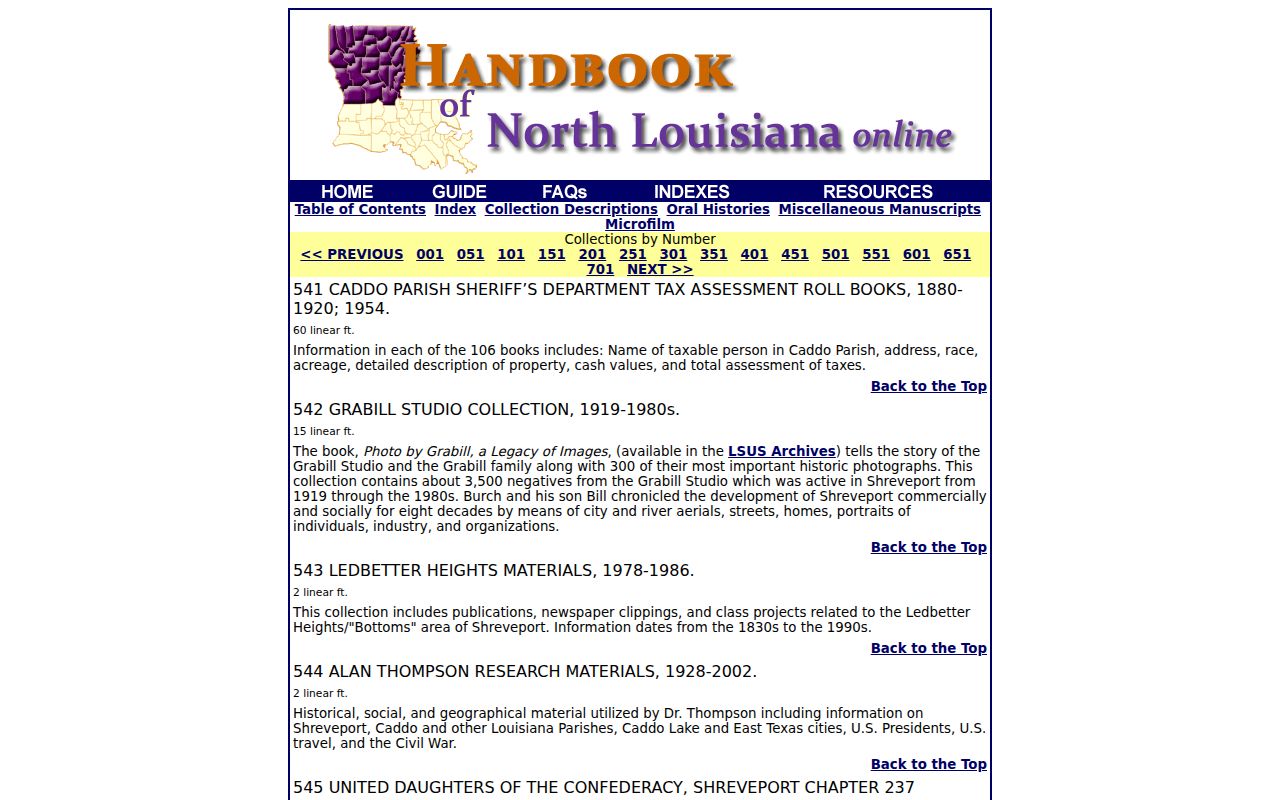
The Grabill Studio collection adds another kind of proof. Its 1919-to-1980s images include Shreveport streets, homes, portraits, firms, and civic groups. A photograph cannot establish residence on its own, yet it can confirm how a block looked, identify a business named in a directory, or show a structure before later changes. The James Smith Noel Collection offers maps and strong pre-1850 print holdings for regional context. Both are public but noncirculating research collections, so a focused advance request saves time.
Shreveport Directory Companion Records
Newspapers and burial records can explain why a listing ends. Shreve Memorial reports local newspaper microfilm and database access, including the Shreveport Times from 1871 through 2009 in its historical newspaper listing. Its obituary and death-notice indexing is strongest after 1992. Earlier years may require microfilm or card-index work. The city burial search covers Greenwood, Oakland, Jewella, and Star cemeteries, while church cemeteries may sit outside that city system.
The Diocese of Shreveport Archives holds centralized Catholic baptism, marriage, and burial records that are at least 72 years old across sixteen north Louisiana civil parishes. Its earliest material dates to 1856. These are faith-specific records, but they can resolve a family event missed by a secular index. Caddo marriage indexes begin in 1838, and the clerk provides the route to certified copies.
Federal census schedules add household composition at ten-year points. Public schedules currently run through 1950 under the 72-year access rule. The lost 1890 population schedules make Shreveport city directories, tax books, newspapers, deeds, and church registers especially useful for that gap.
Shreveport Directory Years in Context
The collection changes shape over time. A short timeline helps prevent a modern catalog statement from being projected backward onto every edition.
| Year | Research milestone |
|---|---|
| 1881 | Earliest specifically reported Polk or Brueggerhoff edition in the local inventory. |
| 1923 | Brueggerhoff volume now represented by a digitized catalog record. |
| 1924 | Start year stated on Shreve Memorial's current print-directory page. |
| 1962-63 | First Cole's run listed in the older local inventory. |
| 1996 | End of the incomplete historical run described by that inventory. |
The labels show why a year-by-year check is safer than assuming continuous publication. Publishers overlap, combined-year volumes appear, and the older finding aid may not match the present shelf. Preserve the title page and edition span in each citation. If a volume is missing, ask Special Collections about print, microfilm, and off-site holdings before treating the year as a true publication gap. Newspaper ads and tax rolls can then bracket the missing date without pretending to replace the directory.
Trace Families in Shreveport Directories
A proven local example links Emanuel M. Bodenheimer to pages 107 and 298 of the 1923 Brueggerhoff directory, then to census households at 815 Delaware Street and a later Louisiana death record. One census citation spells the street “Dellaware.” That small variation shows why exact-string searching can fail even when the family stayed put.
- Find the first likely name entry. Record the title, edition span, page, spelling, address, and all codes.
- Check the nearest earlier and later available editions. Note moves and gaps without treating absence as proof.
- Use the address-organized section when available. It can reveal another listed person at the same house or nearby names.
- Pair the directory year with the closest public census schedule. Compare the image, not only a typed index.
- Test ownership with Caddo deeds or tax rolls. Close the trail with newspapers, cemetery data, marriage records, or a death certificate when access rules permit.
Shreveport's boundaries and street names also changed. Keep the original ward, subdivision, neighborhood, and spelling. Do not silently convert an old address to a modern ZIP. For current address-keyed sources, continue with the Shreveport Street Directory.
Note: Photograph the title page and abbreviation key before the entry so each copied fact remains tied to the correct edition.